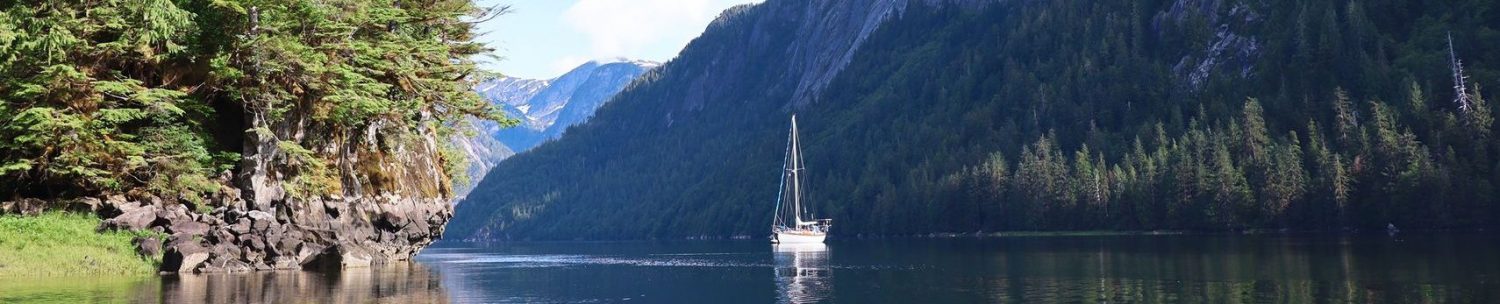
It all goes sideways
Well, we did it. The day after our resupply stop at Marsden Cove, we finally left the greater Whangarei area behind. There was one small detail: no wind. That didn’t stop us. It just meant the engine would do the work for now – a good test of the old diesel donkey.
Our destination sat about 20 nautical miles offshore—a small cluster of rocks called the Flax Islands. The plan was simple enough: motor out, find a quiet bay, drop anchor, and properly begin the 2026 sailing season with a little peace and quiet.
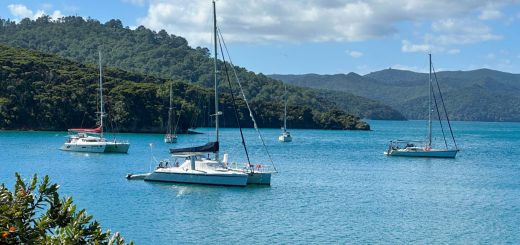
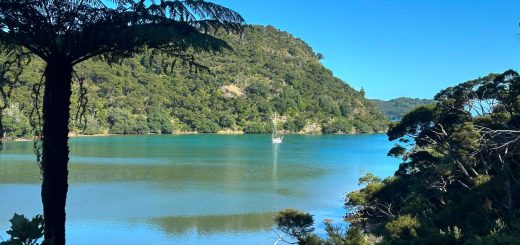
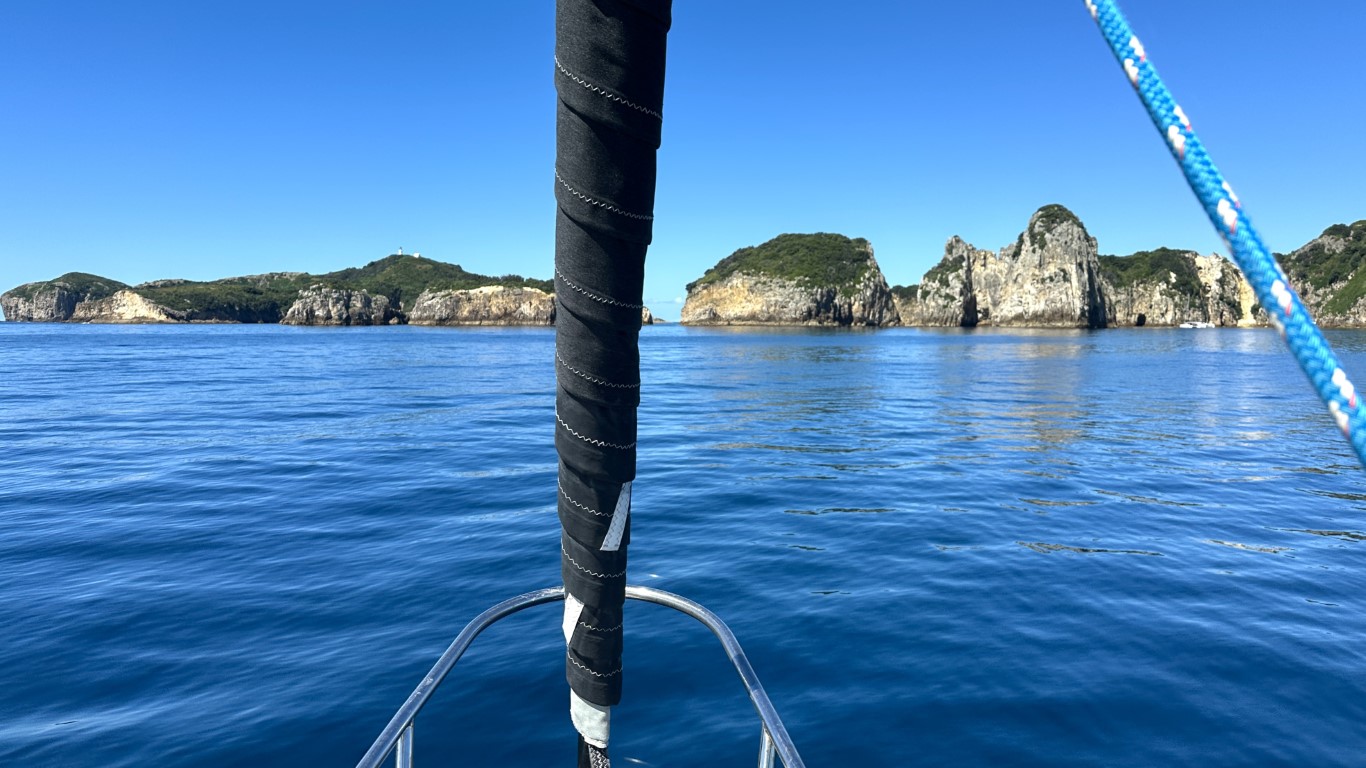
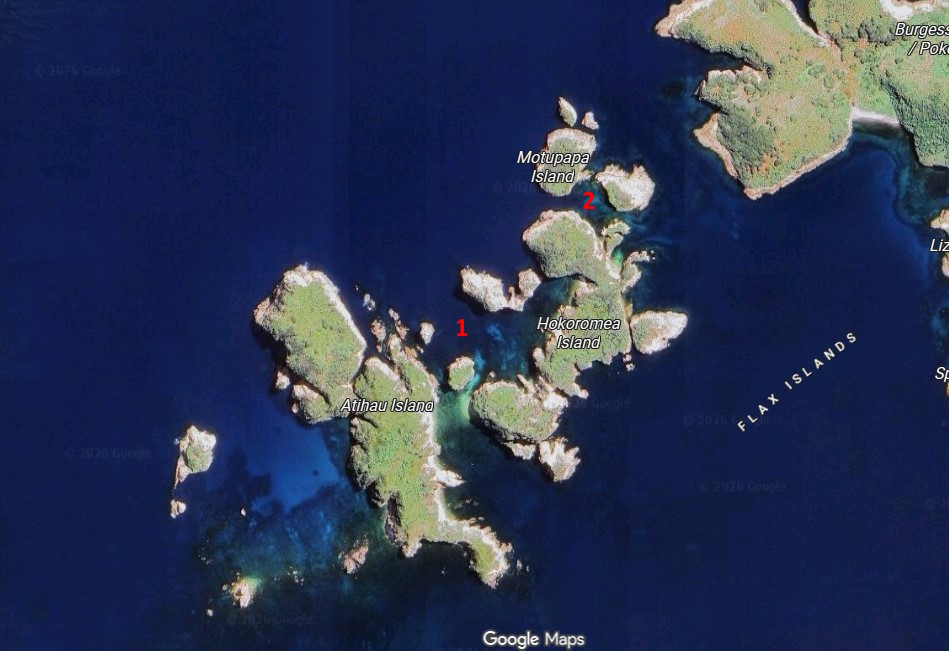 The motor did its job faithfully for six straight hours. Not a breath of wind worth raising sails for. Eventually the islands appeared on the horizon, and by late afternoon we were easing toward our chosen anchorage (1), but two boats were already there. Not exactly the solitude we had imagined. Just around the corner from them, though, was a narrow gap in the rocks (2)—barely wide enough for Meriwether to slip through without scraping her hips. On the other side sat a tiny basin, hardly larger than the entrance itself. Perfect.
We knew it would require a stern anchor to keep from swinging into the rocks, but that’s nothing new for us. With the forecast calling for a light breeze overnight from the southeast, we positioned Meriwether with her bow facing that opening – ass towards the opening we just came through – and set both anchors. The afternoon was calm. The evening was peaceful. Everything looked right. A perfect recipe for disaster.
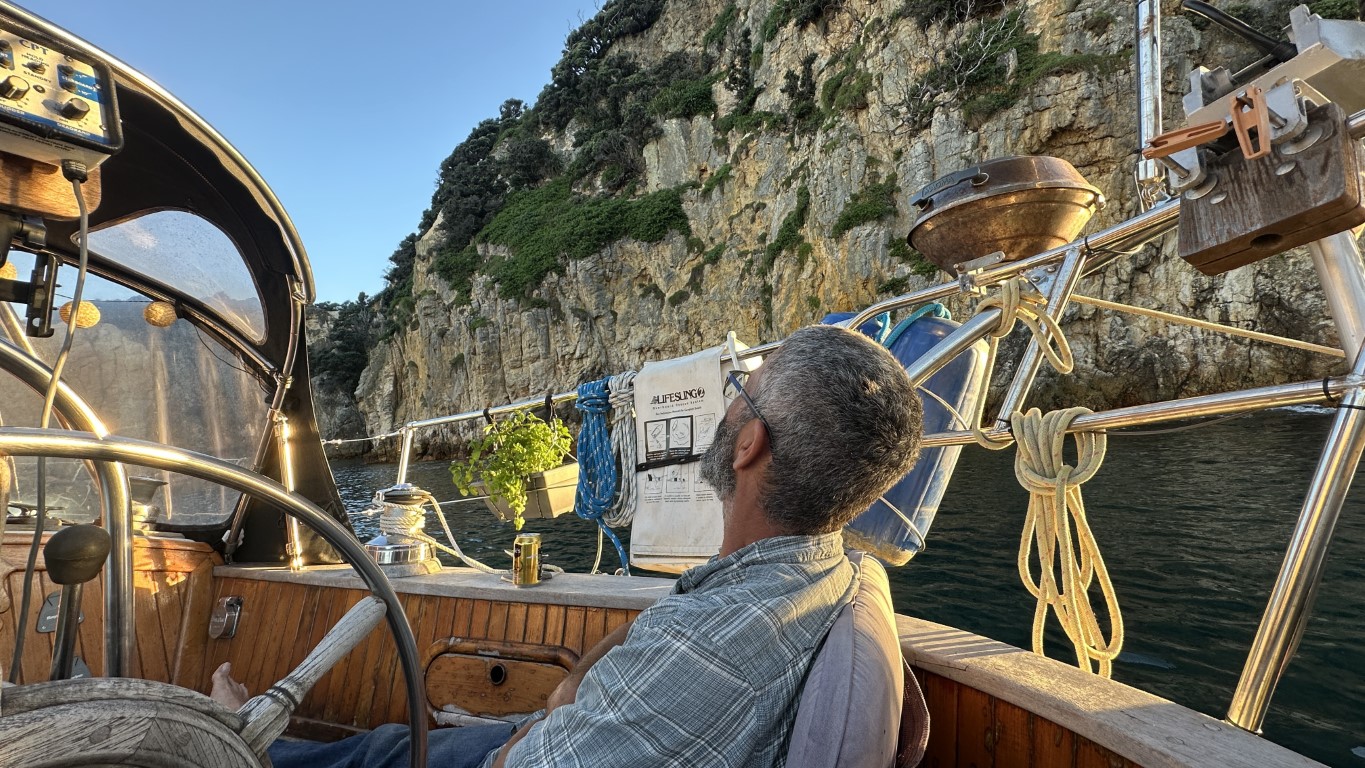
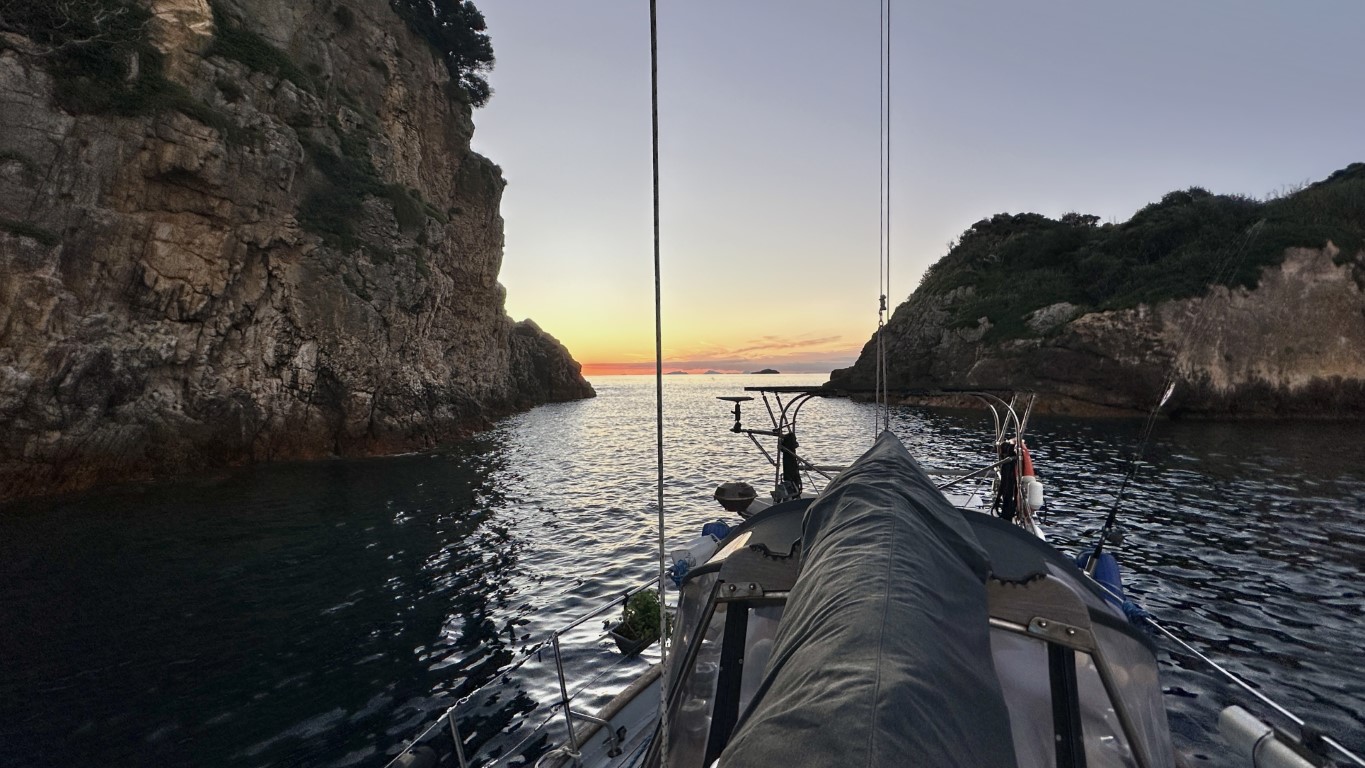
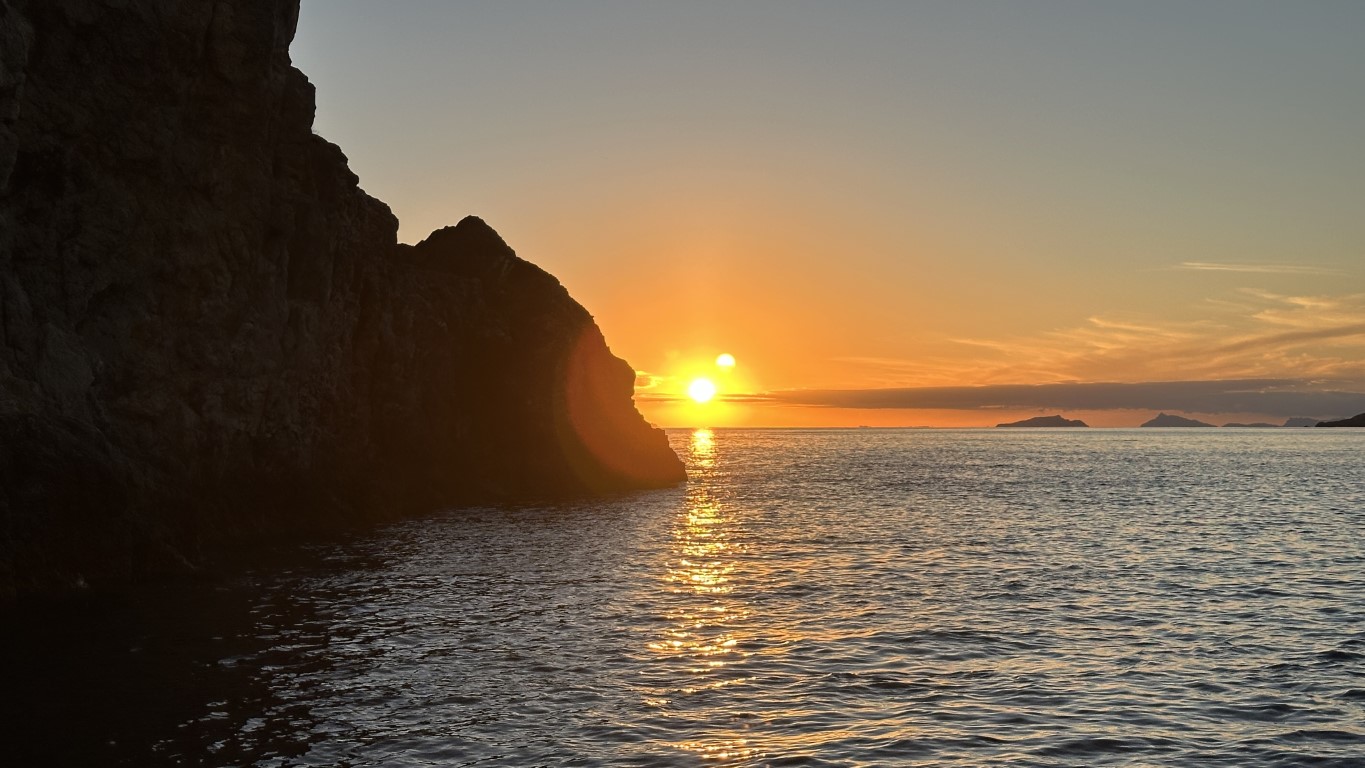
Later that night, after our usual show-in-bed ritual, Kerri glanced at the anchor alarm on her phone and noticed something odd. Our position had shifted. We stepped out onto the deck and immediately felt it. A gentle breeze—maybe ten knots—coming straight from the opposite direction of the forecast. Instead of pushing against our bow anchor, the wind was now pressing directly against the stern. All the load was on the stern anchor. The smaller one. Not ideal.
Neither of us felt comfortable going back to sleep with that setup. So, at 11 p.m. we got dressed and settled into the cockpit to wait and watch. The stern line stretched tight as the wind continued to push against us. The real danger wasn’t the stern anchor dragging—it was what would happen if it did. If that stern anchor let go, the bow anchor would pull us forward. Straight toward the rocks.
So we prepared. Shoes on. Headsets ready. Flashlights out. Windlass powered up. Everything staged for the possibility that things would get dramatic.
For the next couple of hours I sat in the cockpit watching the lines and mentally rehearsing what we would do if the stern anchor failed. Just before 1 a.m., with a long groan from the line under yet another mild gust, it finally happened. The stern anchor started dragging and we were moving toward the rocks, sideways.
We both moved instantly. I jumped to the helm, trying to keep the boat pointed into the wind while still attached to the bow anchor—an awkward and mostly ineffective maneuver. Kerri went for the stern anchor line, trying to haul it in by hand. But even though the anchor had lost its grip on the bottom, the full weight of a 15-ton boat was still pulling against it. The line wouldn’t budge. Worse, if that loose line drifted into the propeller, we’d be finished.
Kerri abandoned the stern line and ran forward to start bringing up the main anchor while I dealt with the mess behind us. I wrapped the stern line around a cockpit winch and started grinding. Once the chain appeared, the winch couldn’t help anymore and I had to haul the rest by hand. Adrenaline helped.
With the stern anchor finally aboard, I could focus fully on the helm. A minute or two later, Kerri freed the bow anchor. Just like that, we had control again. Our hearts were pounding, but neither of us had panicked. We each knew our job and simply did it – a little faster than normal. Once everything was secured, we looked at each other and began breathing again. There was no interest in trying that anchorage again. So we left, less than twelve hours after arriving.
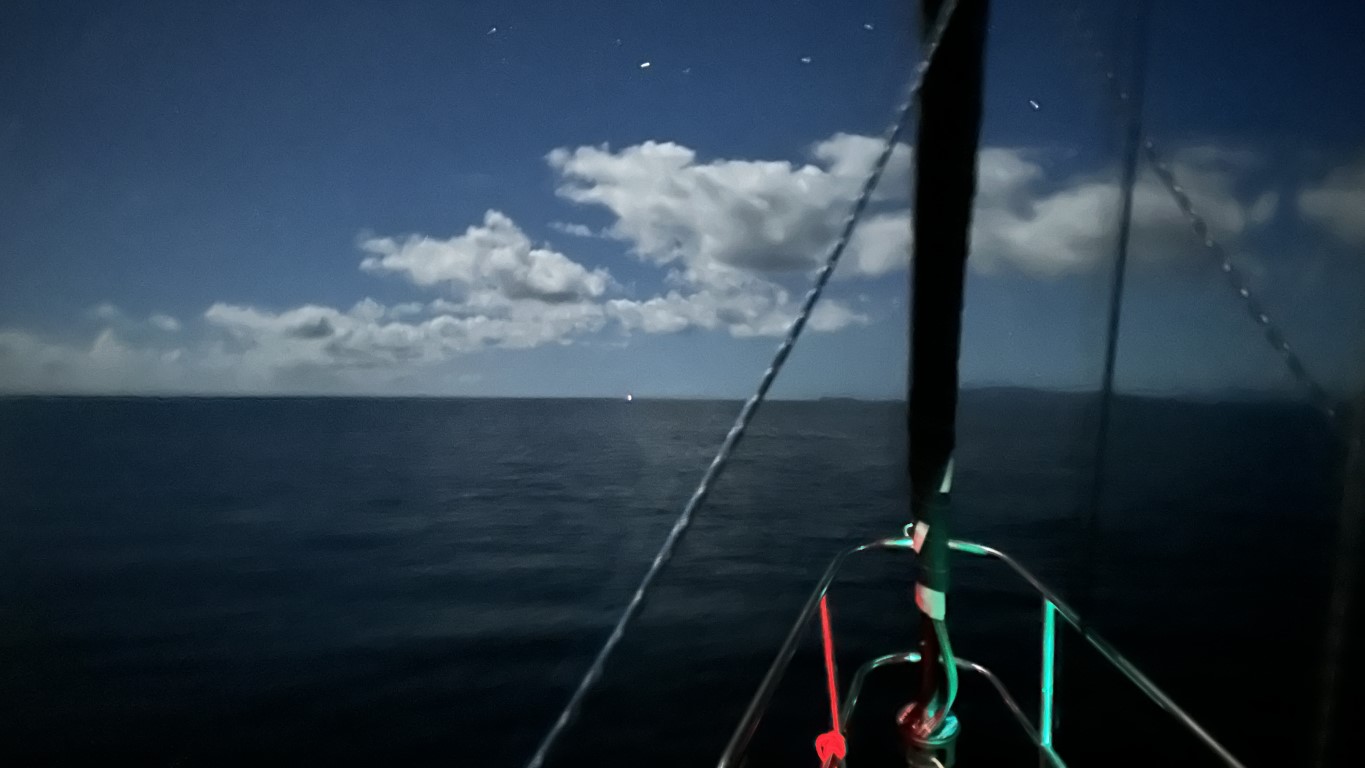
Instead of finding another spot nearby, we decided to make a run for Great Barrier Island, about five hours away. Kerri grabbed a little sleep while I took the night watch with a full moon as my company. Out in open water the wind had finally arrived—from the direction the forecast had promised. Unfortunately it was now blowing from exactly where we needed to go, making the ride less comfortable than hoped. Still, the boat was safe and moving.
Just before sunrise the dark outline of Great Barrier appeared ahead. We slipped into an anchorage, dropped the hook, and finally shut everything down. I made it into bed not long after. Safe but very tired.