Count down to splash
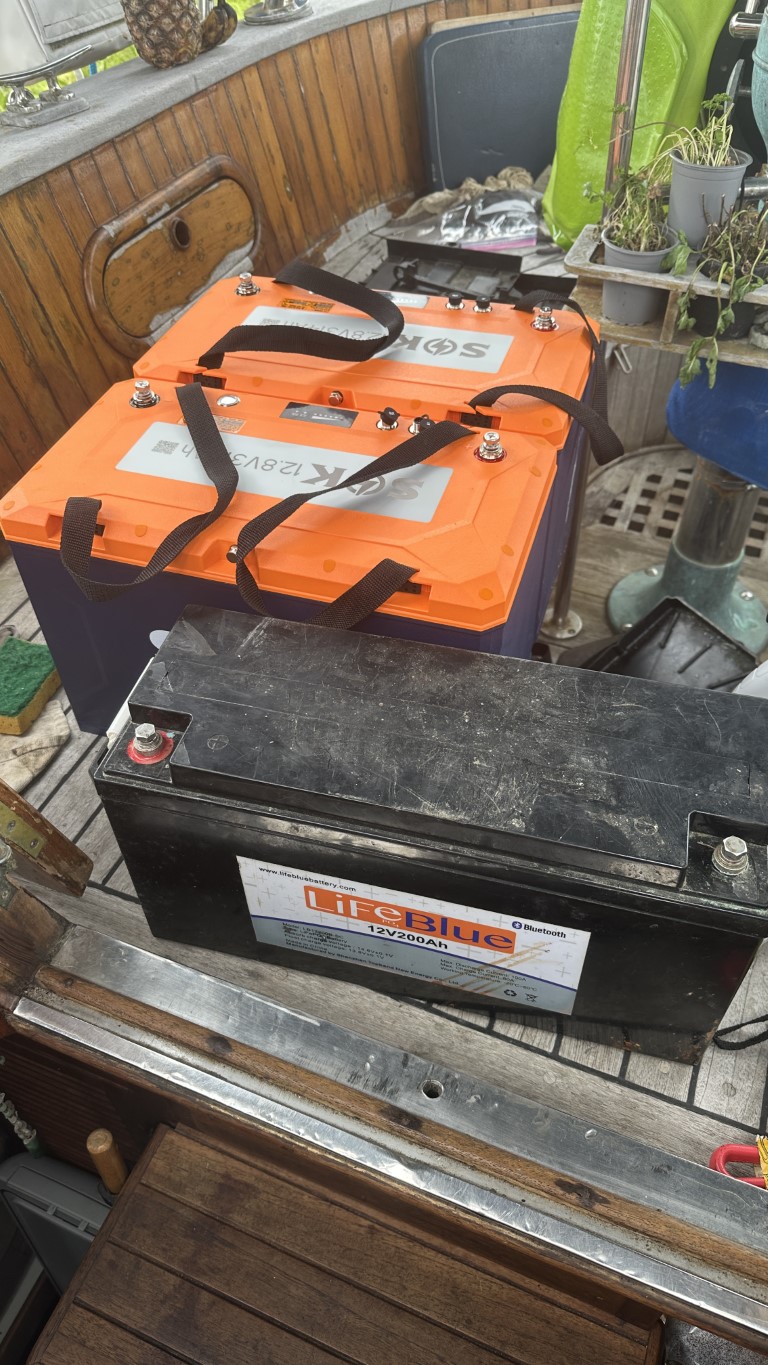
Out with the old (black), in with the new (orange)
Even before we could touch the official critical items list, the boat handed us our first unplanned project: batteries. One of our lithium batteries had taken on water even though the boat was on dry land. As it turns out said Lithium battery was not waterproof. That one was done. The second battery was on its ninth year of service and had been limping along with a problematic cell for over a year. So the decision was made — replace both. Costly, yes, but necessary.
Kerri went straight into research mode and found two new batteries that could be squeezed — just barely — into our existing battery space. They were slightly larger, significantly heavier, and double the capacity. Installing them required cable reshuffling, strategic angling, and a bit of optimism, but in the end they fit. With zero room to spare. Just how we prefer things. We went from 300 amp hours to 650. If we can’t live with that, the problem is us.
Meanwhile, both water tanks had to be opened, scrubbed, sanitized, and flushed before we could trust them for drinking. We’ve done this before, so at least we knew what we were signing up for. It still took multiple days of awkward access panels, scrubbing brushes, and careful rinsing. But — in a rare and almost suspicious twist — the job required exactly the amount of work we expected. No hidden disasters. No bonus problems. That almost never happens on a boat. By the end of it, we could fill the tanks and drink from them without hesitation. That felt like progress.
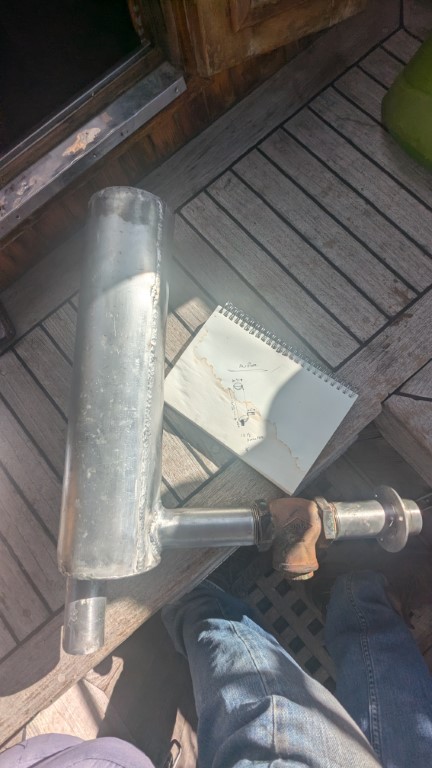
Stupid muffler
Next; our muffler had been “repaired” in Mexico, only to begin leaking again almost immediately. My long-term solution had been a generous application of JB Weld. It held through a Pacific crossing and the entire 2025 season, which is both impressive and slightly concerning. This time, we brought it to a local stainless shop for a proper repair. It came back cleaned up and patched, with a polite warning: good for a year, maybe two — start looking for a replacement. Parts for a nearly 50-year-old boat are best hunted early and slowly, so I made sure to take some measurements before reinstalling.
Solar had been an ongoing argument between us for over a year. I was convinced we needed to double capacity after struggling since leaving the Pacific Northwest. At the same time, our solar arch had nearly shaken itself apart during our Pacific crossing. The whole setup had developed pendulum ambitions in rolling seas. My proposal: relocate two panels down to the cockpit sides to lower weight, upgrade the arch panels to bifacials, and lower the arch itself.
Kerri was unhappy with the side panel idea — they would block her view from the cockpit. In the end, partly because I didn’t have the appetite for another project, we simplified the plan. We replaced the three 200-watt panels on the arch with three 250-watt bifacial panels and had the arch professionally welded at the mounting points to eliminate the constant worry of more broken screws at sea. I never did lower the arch. I’m choosing to trust the welds and ignore future anxiety. The gain isn’t dramatic, but it’s better. We’ll see if it’s enough.
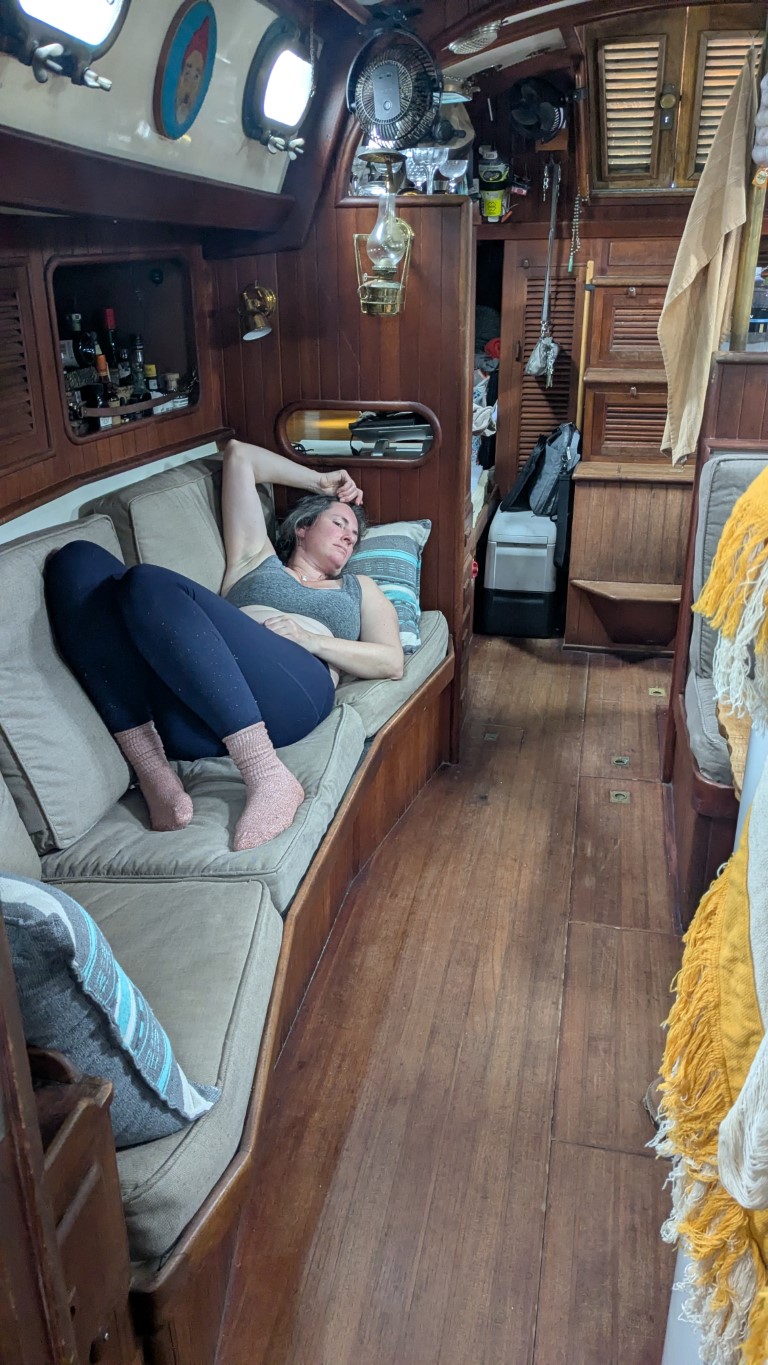
Daily naps, by us both, ensued
Before Meriwether could touch water again, she needed fresh bottom paint. The last coat was applied in Mexico and had carried us thousands of miles. By the time we reached New Zealand, it was done doing its job. The barnacles here are aggressive and plentiful. I was scraping weekly last season — a multi-day chore each time. This year we opted for a locally made ablative paint designed for commercial vessels. If it can survive local fishing boats, it can hopefully survive us. The job itself wasn’t difficult — just messy. Days of sanding, wiping down, taping the waterline, and rolling on three thick coats of copper-infused paint. It will all be repeated next year, so perfection wasn’t the goal. Coverage was.
Then came the supposedly smaller tasks: Replace all zincs. Fix corroded windlass buttons. Change engine fluids and filters. Reinstall the autopilot. Mount the new VHF radio (the old one died mid-Pacific). Align the prop shaft and engine. Fix the head faucet. Straighten and retune a mast that had developed a noticeable scoliosis. Recommission the watermaker. Replace a deck wash through-hull and valve. Reassemble and mount the dinghy. Load anchor and ground tackle. And roughly a thousand smaller items that only reveal themselves once you think you’re done.
By the time a full month had passed, we were staring down our scheduled splash date: February 24th. If we missed it — or if something failed once we were in the water — we wouldn’t get another launch window for two months. The yard was fully booked. Two extra months stuck on land was not an option. The final days were a focused sprint. Only jobs that directly affected flotation and propulsion mattered. Everything else was deferred to “future Tim.”
On the 24th, I felt confident. Or at least as confident as one can be when your home is about to be lowered into saltwater. By noon, Meriwether was being towed from her resting place to the launch ramp. Thirty minutes later, we were onboard as she slid into the water. We moved quickly: checking for leaks, starting the engine, inspecting seals, watching gauges, listening for anything that didn’t sound right. Two lines still tethered us to land.
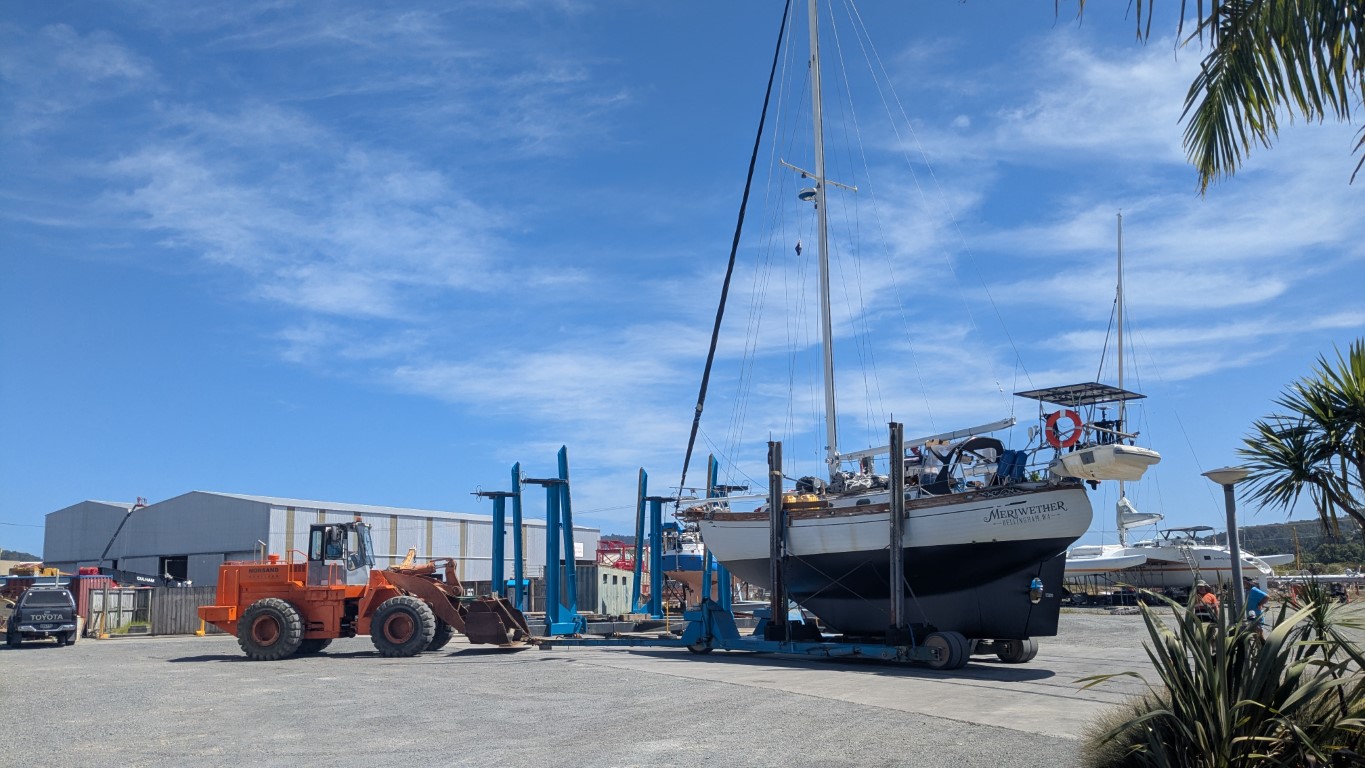
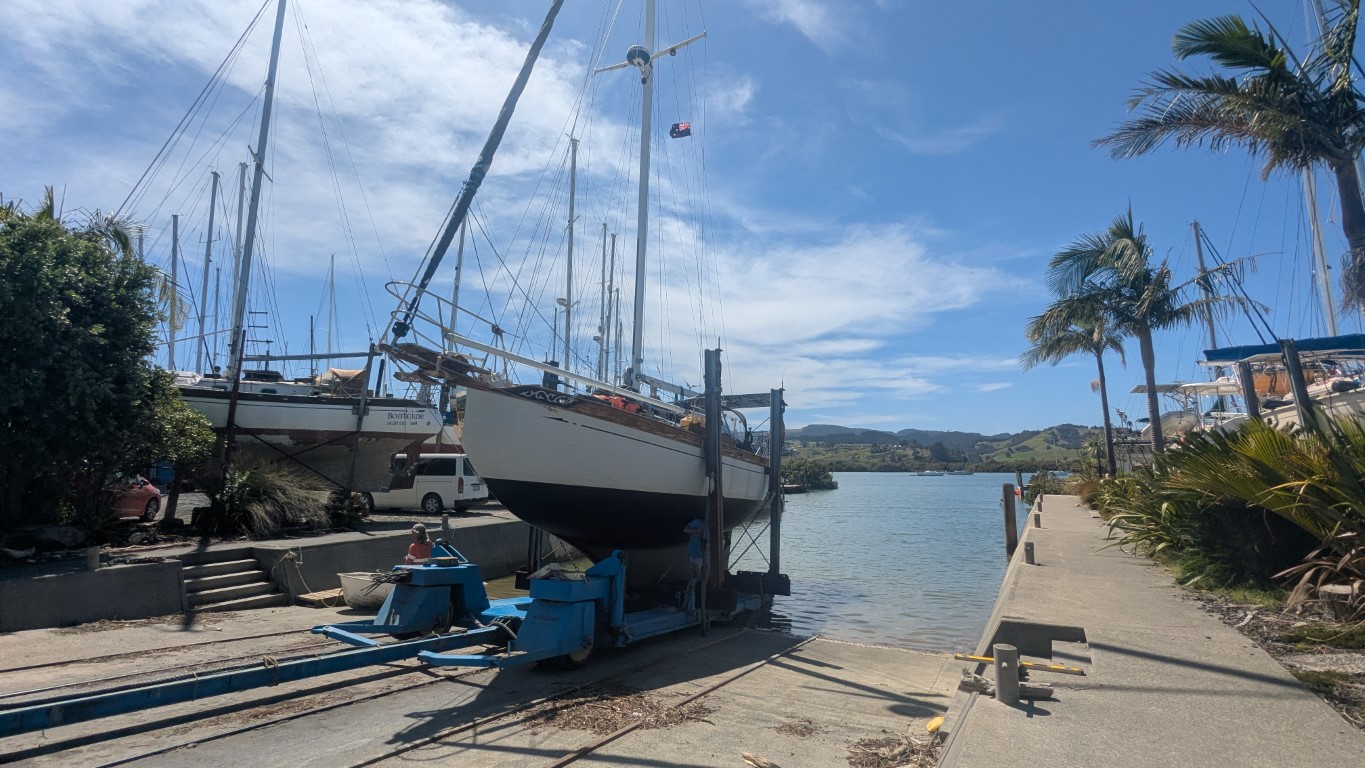
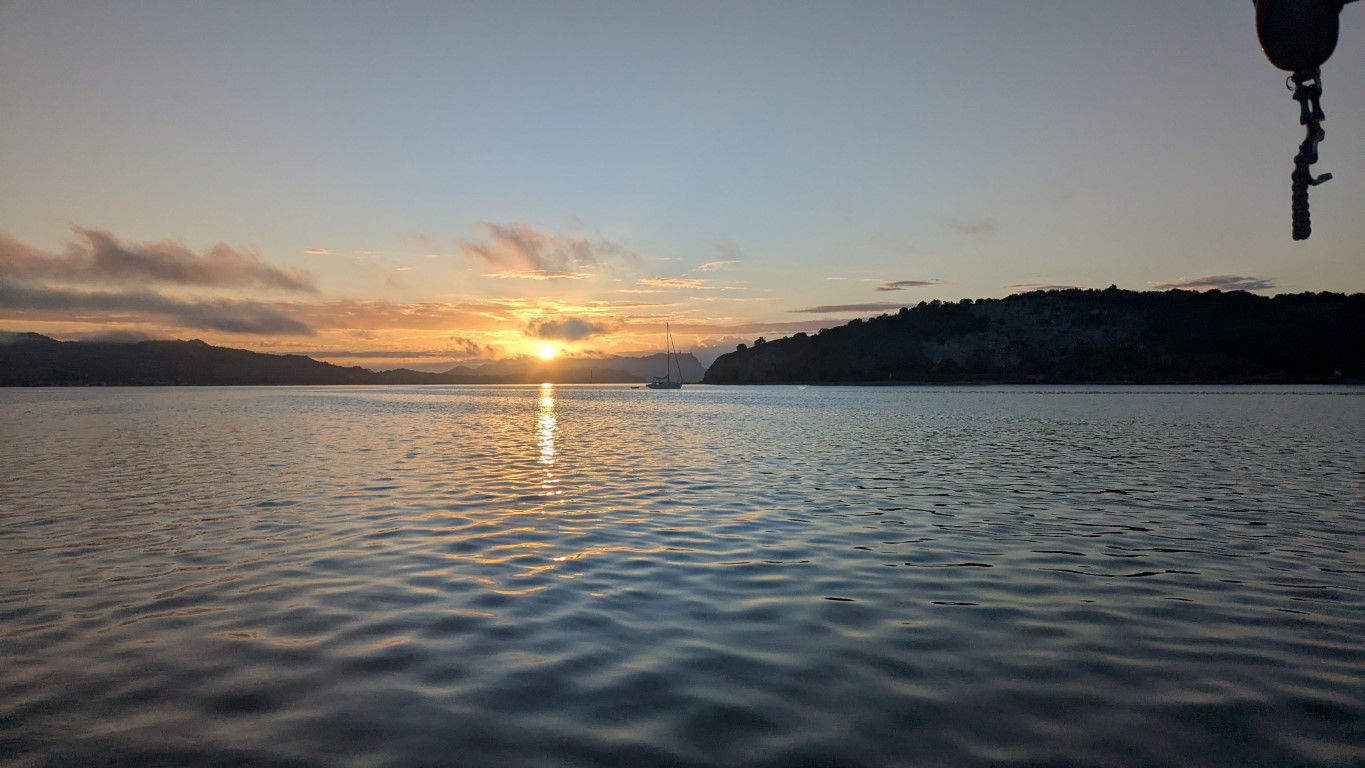
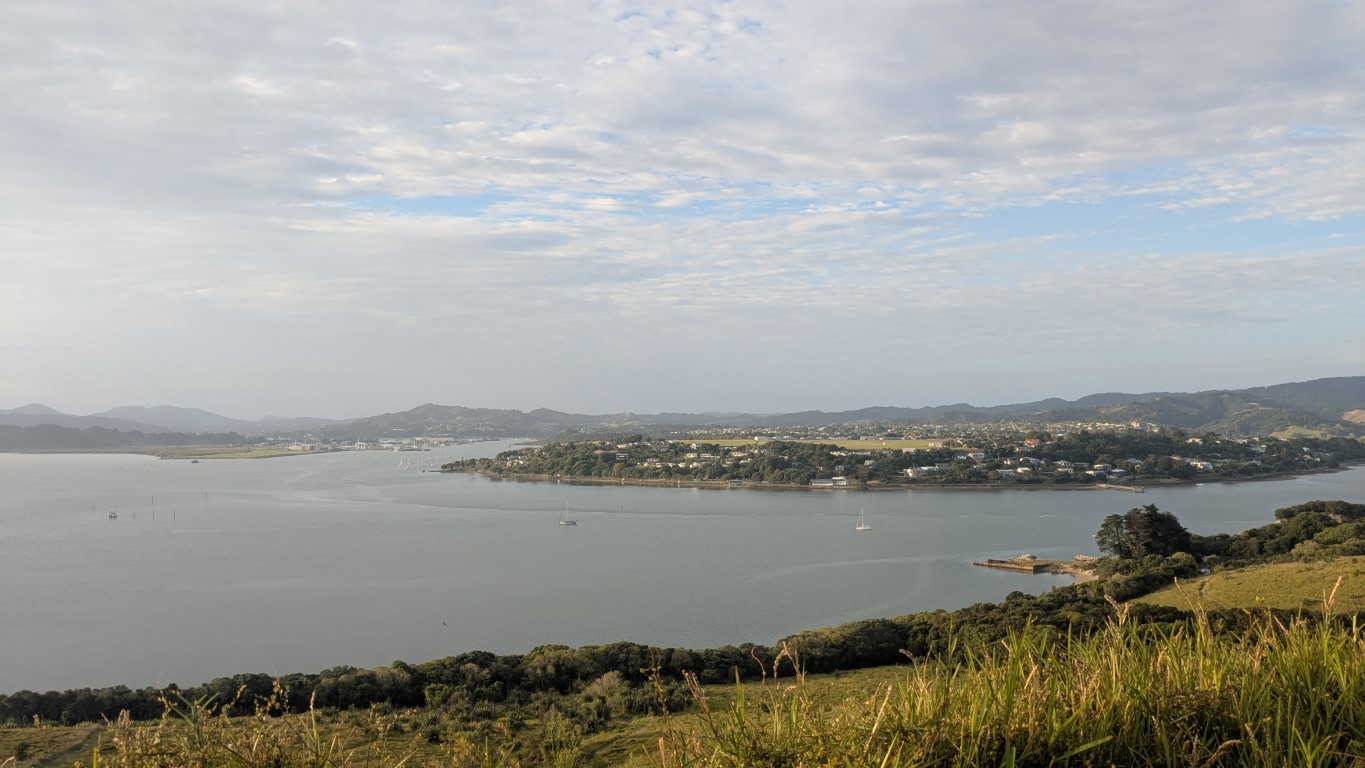
Eventually, the lines were tossed back to shore. We motored — sails not even installed yet — three miles down the channel to a quiet island anchorage. There, finally, the pace slowed. The tools slowly being stowed back in their lockers. The twice-daily doses of three extra strength Tylenol began its retirement. After a month of sweat, dust, and a few ache-related-tears, Meriwether was afloat again. And so were we.