We run away
I wake up at odd hours sometimes. Two in the morning, eight in the morning—it doesn’t seem to follow any sort of logic, and I’ve long since stopped trying to understand it. What I do know is that once I’m awake, that’s it. There’s no rolling over, no drifting back off. I’ve learned not to fight it, because that only guarantees I’ll lay there stewing in frustration. So I get up, find something to do, and let the day start whether it’s ready or not.
That morning it was 3 a.m. I poked around on the computer for a while, then did what has quietly become our most important ritual lately—checking the weather. Within minutes it was obvious something had changed, and not in a subtle way. The forecast had shifted hard overnight. Winds were now stronger, arriving sooner, and behind them was something far more concerning: a storm system dropping down from Fiji that was shaping up to be a full-blown cyclone. We thought we had another day to decide what to do. Turns out, we had hours.
I woke Kerri just before five, fully expecting resistance. Instead, she listened, processed it, and calmly agreed—we needed to go. Not later, not after coffee, not after another look at the forecast. Now. Auckland was about eight hours away. Whangarei was closer to ten. And the wind? It had already started building, sitting in the low-to-mid 20s with nowhere to go but up. By the next day it would be in the 30s, and beyond that, well… the kind of numbers we didn’t want to test ourselves against.
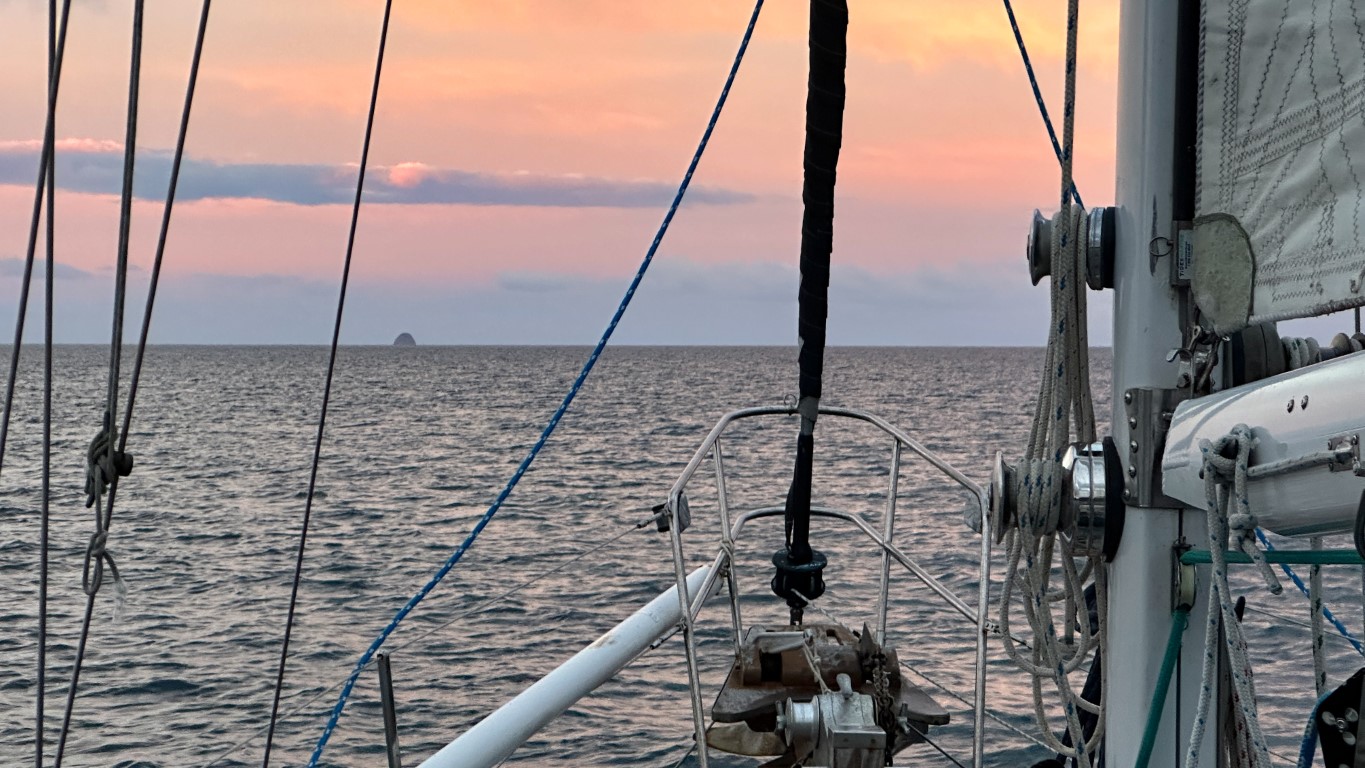
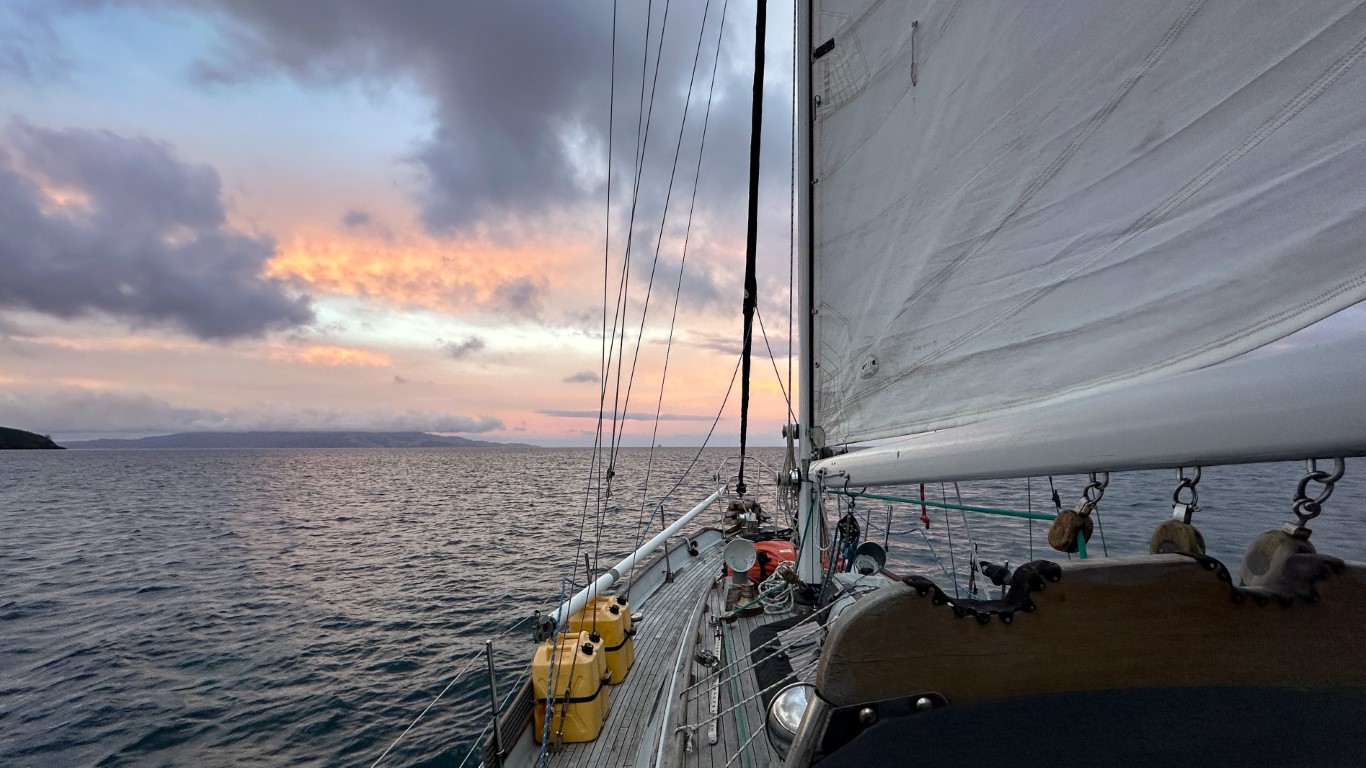
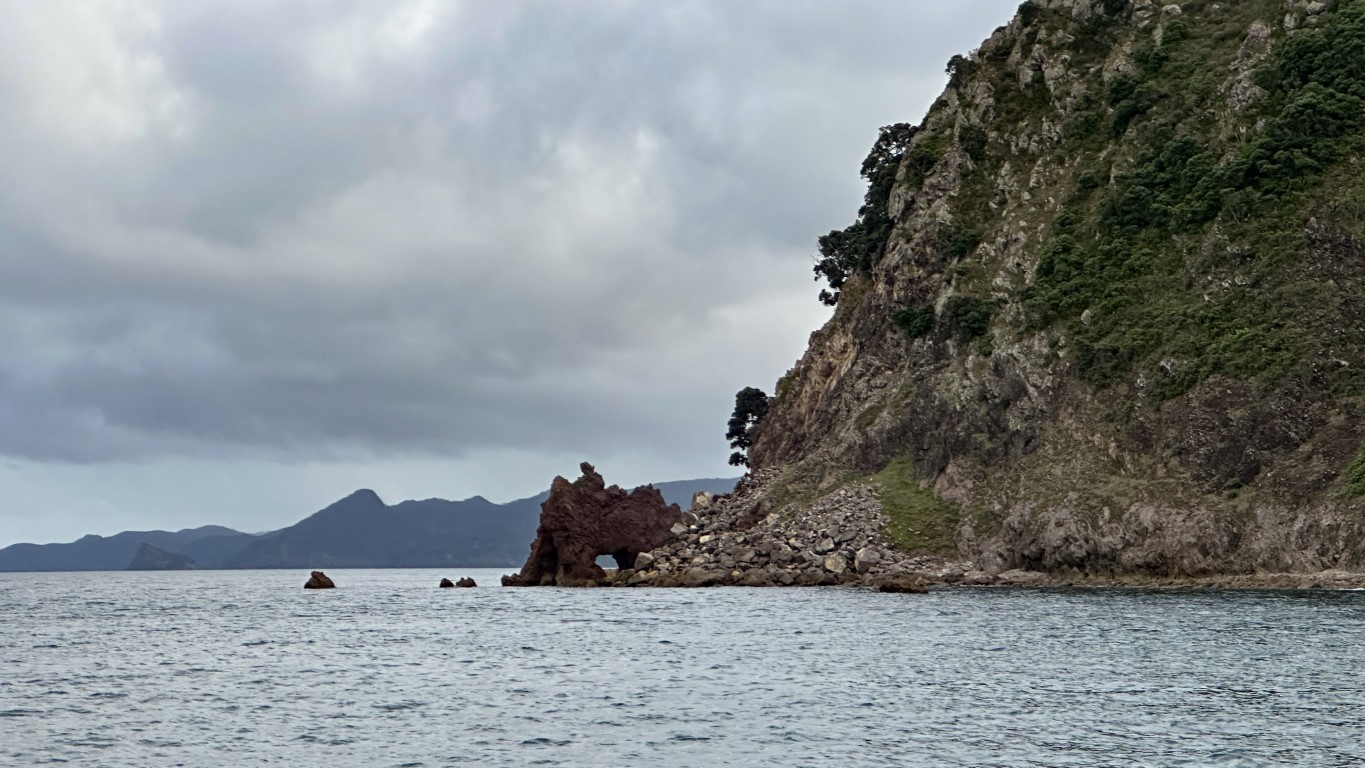
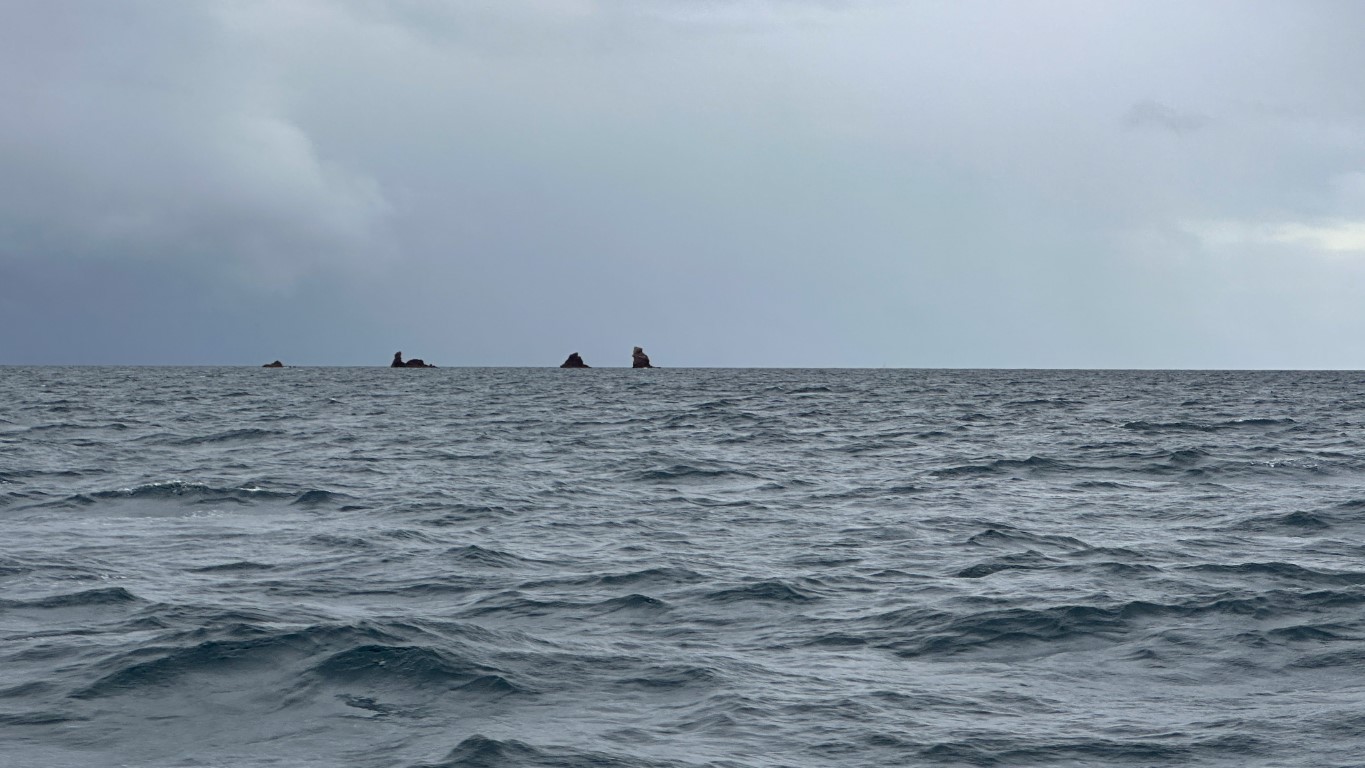
The wind angle made the decision less than ideal. Auckland would have meant running almost dead downwind or jibing our way there—neither option particularly comfortable in rising seas. Whangarei wasn’t perfect either, but it gave us a better line and a clearer plan. By 6 a.m. the anchor was up, sails reefed down in anticipation, and we were already moving out of Tryphena, hugging the northwest coast of Great Barrier Island. For a while, it felt like we had stolen one. High-teen winds, relatively calm seas, and a smooth, fast track up the coast made for fantastic sailing. The chartplotter lit up with AIS targets, and it was clear we weren’t the only ones making a run for it. Boats crisscrossed paths with us, most of them aiming for Auckland, all of us quietly acknowledging the same unspoken thing—time to go.
The sea changed the moment we cleared the northern tip of Great Barrier. The name suddenly made perfect sense. It had been shielding us from the Pacific, and now that protection was gone. Instantly, the sea stood up. Two to three meter swells rolled in from thousands of miles of open ocean, pushed along by 25+ knots of wind. Not monstrous, but relentless. Enough to make things uncomfortable. Enough to knock the autopilot completely out of the game. I took the helm. Eight hours to go.
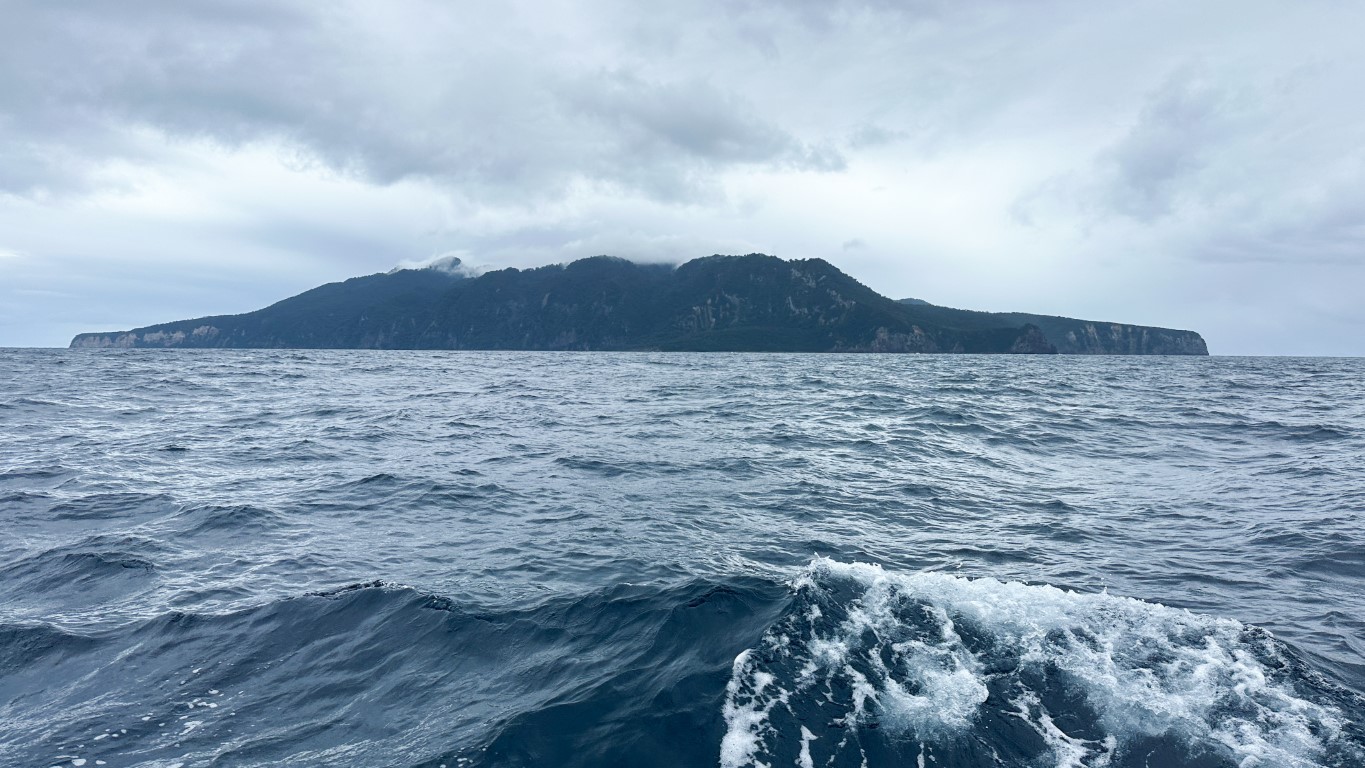
Little Barrier Island is not so little
The routing software had originally suggested a safer line behind Little Barrier Island, trading distance for protection. I overrode it, chasing the shorter route. It didn’t take long to realize that was the wrong call. Little Barrier would have taken the edge off the swell for a little longer, and instead we were fully exposed. We experimented with angles, trying to find something—anything—that would smooth it out. Nothing really worked. By the time we half-seriously considered turning back toward Auckland, we were already more committed to Whangarei than anything else.
 Ahead of us sat Hen Island, about four hours out, and it became our lifeline. It wasn’t large, but if we could tuck in behind it, we’d get a break from the seas before the final push into the harbor. So I aimed straight at it, adjusting just enough to slide into her lee at the last moment. That plan, simple as it was, became the central debate of the next four hours. Every so often, like clockwork, Kerri would remind me that I was steering directly at an island even though it was literally hours ahead. At first I figured confidence would settle it. It didn’t. Then I figured reassurance might help. It didn’t. Eventually, after enough repetition, even I started second-guessing the line. Hand steering in those conditions is already exhausting—physically and mentally—and adding doubt into the mix doesn’t make it easier. At some point, I had to shut it down and focus. There was no room left for debate. I was at the helm, I decide where we are going, full stop.
Two hours out, I was already struggling to stay upright, still glued to the helm. One hour out, running on fumes, I knew we had it—but I kept that quiet and just drove the line. And then, finally, it clicked. The geometry made sense. The approach opened up. What had looked tight from a distance turned into plenty of room. We slipped into the lee with half a mile to spare. Easy. At least, that’s what it looked like in the end.
With the seas calming, I handed the helm to Kerri and collapsed into the cockpit. Eight hours awake, five of them hand steering, and my body was done. Feet throbbing, hands cramping, eyes barely staying open. The sun teased its way through the clouds just enough to offer a bit of warmth while I laid there. I didn’t sleep, but I didn’t need to. Just stopping was enough.
About thirty minutes later, as we cleared the far side of Hen Island, the protection vanished just as quickly as it had arrived. The swell returned, the boat began to roll again, and Kerri was still at the helm while I stayed laid out in the cockpit, not quite ready to take it back over. The problem is, Kerri has earned the nickname “backwards girl” for a reason. Downwind steering has always been a challenge for her—especially keeping track of which way to correct when the wind is pushing from behind—and in the past that’s led to a couple accidental jibes. Those moments rattled her confidence pretty good, which is why I had taken on most of the steering earlier in the day.
And then came number three. The boom ripped across the deck with a force that instantly snapped me upright. It was violent, fast, and headed straight for disaster, but for the poor-man’s preventer setup we’ve been using since the Pacific crossing. Halfway through its arc, the line caught and held just enough to stop it from completing the full swing and taking out something important—rigging, gear, or worse. Kerri corrected immediately, but the damage was already done mentally. She stepped away from the helm, and I was back on it without hesitation. Break-time over.
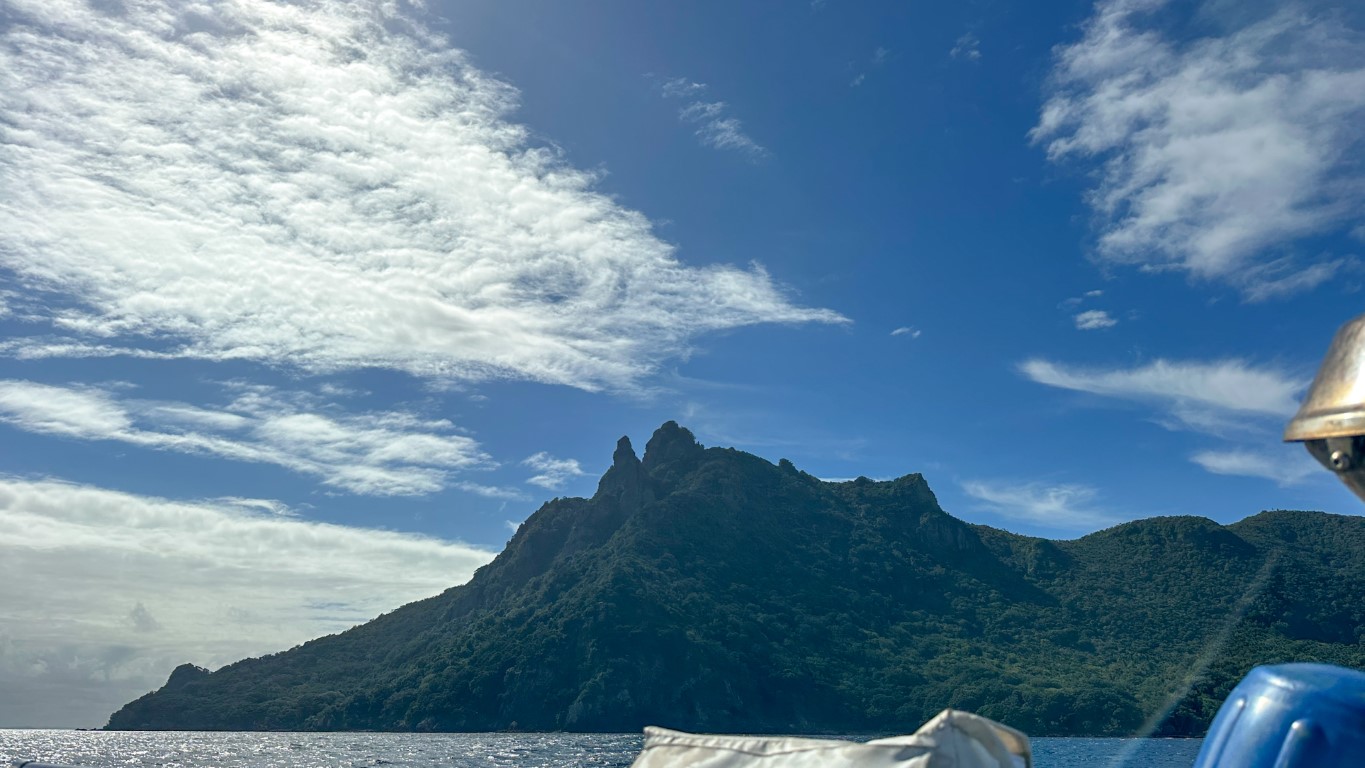
The final hours were a grind. The kind where time stretches, every mile feels earned, and you stop thinking about comfort altogether. By the time we entered Whangarei Harbor, it was pushing 4 p.m., and the relief of protected water was immediate. The autopilot came back online, and for the first time all day, I wasn’t physically steering—though staying alert in a busy channel meant relaxing was still a relative concept. We tried to get into Marsden Cove Marina, but the holiday weekend meant no answer. We briefly considered just taking a slip and sorting it out later, but thought better of it. Another hour of motoring brought us to The Nook, where we finally dropped anchor in a spot that would hold us through the next couple days of wind. Forecast was calling for 40 knots. Not ideal. But after eleven hours of pushing hard, we were in a place that could handle it. And that was enough.